Sunday, August 16, 2020

Burt L. Standish's tale of baseball and sportsmanship.  This is part of the Dick Merriwell series.

Monday, August 3, 2020

The Young Section-Hand by Burton Egbert Stevenson


Great railroad adventure written for young men, but suitable mystery and thrills for the whole family to read.

Saturday, August 1, 2020

The Golden Boys at the Haunted Camp by L. P. Wyman


The Golden Boys at the Haunted Camp by L. P. Wyman

Levi Parker Wyman  Pseudonym for 

Schaeffer was born in Freedom Plains, New York, in 1898, the son of Presbyterian preacher Charles Schaeffer and his wife Minnie. He grew up in Springfield, Massachusetts. After completing high school, he enrolled in the Pratt Institute in 1916. At Pratt his teachers included Harvey Dunn and Charles Chapman. Dunn critiqued many of Schaeffer's early projects. While a student at Pratt, Schaeffer illustrated the first of seven 'Golden Boy' books written by L. P. Wyman. Mead was married in 1921. He and his wife, Elizabeth, were to be the parents of two daughters.

In 1922, at age 24, he was hired to illustrate a series of classic novels for publisher Dodd Mead. His work for Dodd Mead continued until 1930. The books that he illustrated during this period included Moby Dick, Typee, and Omoo by Herman Melville; The Count of Monte Cristo; and Les Misérables by Victor Hugo.

In 1930, Schaeffer turned his attention from fictional characters to real people depicted in real settings. During the 1930s and 1940s he received commissions from magazines including Good Housekeeping, McCall's, the Saturday Evening Post, The Ladies Home Journal, Country Gentleman, and Cosmopolitan. He produced 46 covers for the weekly Saturday Evening Post. His work as a war correspondent for the Post during World War II resulted in a well-known series of covers illustrating American military personnel.

He lived for a time in New Rochelle, New York, but for most of his career lived in Arlington, Vermont, where his studio was in a barn. Norman Rockwell was a good friend, and Schaeffer and his family often posed as models for Rockwell's Saturday Evening Post illustrations and paintings.

In retirement, Schaeffer lived in Vermont, where Rockwell was a neighbor. Schaeffer suffered a heart attack and died in New York City on November 6, 1980.
 

Tuesday, February 4, 2020

A thrilling mystey for young men, but great reading for everyone.
Charles Austin Fosdick (September 6, 1842 – August 22, 1915), better known by his nom de plume Harry Castlemon, was a prolific writer of juvenile stories and novels, intended mainly for boys. He was born in Randolph, New York, and received a high school diploma from Central High School in Buffalo, New York. He served in the Union Navy from 1862 to 1865, during the American Civil War, acting as the receiver and superintendent of coal for the Mississippi River Squadron.Fosdick had begun to write as a teenager, and drew on his experiences serving in the Navy in such early novels as Frank on a Gunboat (1864) and Frank on the Lower Mississippi (1867). He soon became the most-read author for boys in the post-Civil War era, the golden age of children's literature.
Fosdick once remarked that: "Boys don't like fine literature. What they want is adventure, and the more of it you can get in two-hundred-fifty pages of manuscript, the better fellow you are." Fosdick served up a lot of adventure in such popular book series as the Gunboat Series, the Rocky Mountain Series, the Roughing It Series, the Sportsman's Club Series, and The Steel Horse, or the Rambles of a Bicycle.
He was "Uncle Charlie" to famed liberal Baptist minister, Harry Emerson Fosdick, whose writings reflected fondly on the time spent as a boy visiting Fosdick at his home in Westfield, New York. 

Monday, November 4, 2019

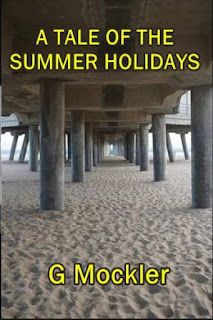
https://www.ronaldbooks.com/Books+for+Young+Men-7/A+Tale+of+the+Summer+Holidays+by+G+Mockler-3225
Four young men of one family receive a message for a secret meeting right after the beginning of the summer break from school.  This leads to excityement, adventure, and mystery for the young men.  This is a great books for young people and adulsts as well.

Thursday, October 17, 2019

A thrilling novel in the Aeroplane Boys Series by Ashton Lamar (H. L. Sayler).

This EPUB is readable on all devices and on every web browser on every computer and cell phone. Kindle, Nook, Ipod, Ipad, Android, Windows, and Mac all support this format. This EPUB has no encryption, so one can safely and easily move it from one device to another, or share it with others.

Sunday, October 13, 2019

This  is a somewhat fanciful version of American History.  Very readable and a great education for those who love adventure and history.
The Oregon boundary dispute or the Oregon Question was a controversy over the political division of the Pacific Northwest of North America between several nations that had competing territorial and commercial aspirations over the region.
Expansionist competition into the region began in the 18th century, with participants including the Russian Empire, the United Kingdom, Spain and the United States. By the 1820s, both the Russians, through the Russo-American Treaty of 1824 and the Russo-British Treaty of 1825, and the Spanish, by the Adams–Onís Treaty of 1819, formally withdrew their territorial claims in the region. Through these treaties the British and Americans gained residual territorial claims in the disputed area. The remaining portion of the North American Pacific coast contested by the United Kingdom and the United States was defined as the following: west of the Continental Divide of the Americas, north of Alta California at 42nd parallel north, and south of Russian America at parallel 54°40′ north; typically this region was referred to by the British as the Columbia District and the Oregon Country by the Americans. The Oregon dispute began to become important in geopolitical diplomacy between the British Empire and the new American republic, especially after the War of 1812.
In the 1844 U.S. presidential election, ending the Oregon Question by annexing the entire area was a position adopted by the Democratic Party. Some scholars have claimed the Whig Party's lack of interest in the issue was due to its relative insignificance among other more pressing domestic problems. Democratic candidate James K. Polk appealed to the popular theme of manifest destiny and expansionist sentiment, defeating Whig Henry Clay. Polk sent the British government the previously offered partition along the 49th parallel. Subsequent negotiations faltered as the British plenipotentiaries still argued for a border along the Columbia River. Tensions grew as American expansionists like Senator Edward A. Hannegan of Indiana and Representative Leonard Henly Sims of Missouri, urged Polk to annex the entire Pacific Northwest to the 54°40′ parallel north, as the Democrats had called for in the election. The turmoil gave rise to slogans such as "Fifty-four Forty or Fight!" As relations with Mexico were rapidly deteriorating following the annexation of Texas, the expansionist agenda of Polk and the Democratic Party created the possibility of two different, simultaneous wars for the United States. Just before the outbreak of the Mexican–American War, Polk returned to his earlier position of a border along the 49th parallel.
The 1846 Oregon Treaty established the border between British North America and the United States along the 49th parallel until the Strait of Georgia, where the marine boundary curved south to exclude Vancouver Island and the Gulf Islands from the United States. As a result, a small portion of the Tsawwassen Peninsula, Point Roberts, became an exclave of the United States. Vague wording in the treaty left the ownership of the San Juan Islands in doubt, as the division was to follow "through the middle of the said channel" to the Strait of Juan de Fuca. During the so-called Pig War, both nations agreed to a joint military occupation of the islands. Kaiser Wilhelm I of the German Empire was selected as an arbitrator to end the dispute, with a three-man commission ruling in favor of the United States in 1872. There the Haro Strait became the border line, rather than the British favored Rosario Strait. The border established by the Oregon Treaty and finalized by the arbitration in 1872 remains the boundary between the United States and Canada in the Pacific Northwest.
This EPUB is readable on all devices and on every web browser on every computer and cell phone. Kindle, Nook, Ipod, Ipad, Android, Windows, and Mac all support this format. This EPUB has no encryption, so one can safely and easily move it from one device to another, or share it with others.