Friday, October 23, 2020

Bomba the Jungle Boy Among the Slaves


Number Eight in the Bomba the Jungle Boy Series by Roy Rockwood

  Bomba is out hunting soon after his return to the moluca of the Araos from the Swamp of Death. There, he had acquired medication from a rare flower that was slowly helping Cody Casson and Sobrinini regain their memories about Bomba's origins. It will work but not in time for this volume of Bomba's Amazon adventures.

The action never slackens. While hunting, Bomba is attacked and chased by the headhunters of the Giant Cataract. Both Nascanora and Ruspak (the Medicine Man)accompany this band and Bomba is fortunate to find (an inevitable) cave with a secret entrance to escape capture in. But this encounter is only the tip of the tropical ice berg, because it is soon found out that the Giant Cataract and Swamp of Death are about to unite in an assault on the molocca of Honduras. What? No cannibals from Terror Trail?

Awaiting the attack, Sobrinini predicts Bomba will find his father, and yet not. This, along with her vision of the headhunters and Abaragos reveal she has true insight to the future.

It appears that two such war-like tribes can't stay in alliance too long and soon, the Abaragos return to their swamp, leaving the assault to the headhunters. Bomba handles the village's defense and when Nascanora attacks, it is with a decisive defeat, yet again!

Fearing the worst, Chief Hondura had sent his daughter Pirah to safety with the friendly Mantanas tribe, along with Gibo, Ashati, Neram and Lodo. When Bomba goes to retrieve Pirah after the Araos victory, he stumbles across Lodo returning with a tale of ambush and capture by warriors from the Valley of Skulls, the Araks. Naturally, Bomba travels to this forbidden land to rescue Pirah and his friends.

Uncharacteristically negligent, Bomba is captured by the Araks, who guard the entrance to the Valley of Skulls. In their village, Bomba is interrogated by the half-breed Tom Paul and ultimately transported into the valley where the Jungle Boy meets Ashati, Neram and Gibo, plus the valley's master, The Boss, Don Mendonza. The Boss pretends to be Bomba's father, based on the info the Jungle Boy had passed along to Tom Paul. Finally, Bomba realizes the fraud being perpetuated and arranges the escape of himself, his three friends, Pirah and the slaves of the valley.

The Araks seek them out but when Tom Paul and Don Mendonza stumble into quicksand, they are quickly left to their fate by the Araks who discontinue their pursuit of the escaped captives and slaves. All's well for now, until Bomba's and Gibo's journey along the Underground River! 

Monday, August 17, 2020

Double Play by Ralph Henry Barbour

 A tale of boys and school.  Ralph Henry Barbour (November 13, 1870 – February 19, 1944) was an American novelist, who primarily wrote popular works of sports fiction for boys. In collaboration with L. H. Bickford, he also wrote as Richard Stillman Powell, notably Phyllis in Bohemia. Other works included light romances and adventure.

We use several credit card processors, including Paypal, for your security and convenience.

Sunday, August 16, 2020

Burt L. Standish's tale of baseball and sportsmanship.  This is part of the Dick Merriwell series.

Monday, August 3, 2020

The Young Section-Hand by Burton Egbert Stevenson


Great railroad adventure written for young men, but suitable mystery and thrills for the whole family to read.

Saturday, August 1, 2020

The Golden Boys at the Haunted Camp by L. P. Wyman


The Golden Boys at the Haunted Camp by L. P. Wyman

Levi Parker Wyman  Pseudonym for 

Schaeffer was born in Freedom Plains, New York, in 1898, the son of Presbyterian preacher Charles Schaeffer and his wife Minnie. He grew up in Springfield, Massachusetts. After completing high school, he enrolled in the Pratt Institute in 1916. At Pratt his teachers included Harvey Dunn and Charles Chapman. Dunn critiqued many of Schaeffer's early projects. While a student at Pratt, Schaeffer illustrated the first of seven 'Golden Boy' books written by L. P. Wyman. Mead was married in 1921. He and his wife, Elizabeth, were to be the parents of two daughters.

In 1922, at age 24, he was hired to illustrate a series of classic novels for publisher Dodd Mead. His work for Dodd Mead continued until 1930. The books that he illustrated during this period included Moby Dick, Typee, and Omoo by Herman Melville; The Count of Monte Cristo; and Les Misérables by Victor Hugo.

In 1930, Schaeffer turned his attention from fictional characters to real people depicted in real settings. During the 1930s and 1940s he received commissions from magazines including Good Housekeeping, McCall's, the Saturday Evening Post, The Ladies Home Journal, Country Gentleman, and Cosmopolitan. He produced 46 covers for the weekly Saturday Evening Post. His work as a war correspondent for the Post during World War II resulted in a well-known series of covers illustrating American military personnel.

He lived for a time in New Rochelle, New York, but for most of his career lived in Arlington, Vermont, where his studio was in a barn. Norman Rockwell was a good friend, and Schaeffer and his family often posed as models for Rockwell's Saturday Evening Post illustrations and paintings.

In retirement, Schaeffer lived in Vermont, where Rockwell was a neighbor. Schaeffer suffered a heart attack and died in New York City on November 6, 1980.
 

Tuesday, February 4, 2020

A thrilling mystey for young men, but great reading for everyone.
Charles Austin Fosdick (September 6, 1842 – August 22, 1915), better known by his nom de plume Harry Castlemon, was a prolific writer of juvenile stories and novels, intended mainly for boys. He was born in Randolph, New York, and received a high school diploma from Central High School in Buffalo, New York. He served in the Union Navy from 1862 to 1865, during the American Civil War, acting as the receiver and superintendent of coal for the Mississippi River Squadron.Fosdick had begun to write as a teenager, and drew on his experiences serving in the Navy in such early novels as Frank on a Gunboat (1864) and Frank on the Lower Mississippi (1867). He soon became the most-read author for boys in the post-Civil War era, the golden age of children's literature.
Fosdick once remarked that: "Boys don't like fine literature. What they want is adventure, and the more of it you can get in two-hundred-fifty pages of manuscript, the better fellow you are." Fosdick served up a lot of adventure in such popular book series as the Gunboat Series, the Rocky Mountain Series, the Roughing It Series, the Sportsman's Club Series, and The Steel Horse, or the Rambles of a Bicycle.
He was "Uncle Charlie" to famed liberal Baptist minister, Harry Emerson Fosdick, whose writings reflected fondly on the time spent as a boy visiting Fosdick at his home in Westfield, New York. 

Monday, November 4, 2019

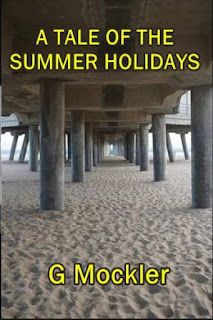
https://www.ronaldbooks.com/Books+for+Young+Men-7/A+Tale+of+the+Summer+Holidays+by+G+Mockler-3225
Four young men of one family receive a message for a secret meeting right after the beginning of the summer break from school.  This leads to excityement, adventure, and mystery for the young men.  This is a great books for young people and adulsts as well.

Thursday, October 17, 2019

A thrilling novel in the Aeroplane Boys Series by Ashton Lamar (H. L. Sayler).

This EPUB is readable on all devices and on every web browser on every computer and cell phone. Kindle, Nook, Ipod, Ipad, Android, Windows, and Mac all support this format. This EPUB has no encryption, so one can safely and easily move it from one device to another, or share it with others.

Sunday, October 13, 2019

This  is a somewhat fanciful version of American History.  Very readable and a great education for those who love adventure and history.
The Oregon boundary dispute or the Oregon Question was a controversy over the political division of the Pacific Northwest of North America between several nations that had competing territorial and commercial aspirations over the region.
Expansionist competition into the region began in the 18th century, with participants including the Russian Empire, the United Kingdom, Spain and the United States. By the 1820s, both the Russians, through the Russo-American Treaty of 1824 and the Russo-British Treaty of 1825, and the Spanish, by the Adams–Onís Treaty of 1819, formally withdrew their territorial claims in the region. Through these treaties the British and Americans gained residual territorial claims in the disputed area. The remaining portion of the North American Pacific coast contested by the United Kingdom and the United States was defined as the following: west of the Continental Divide of the Americas, north of Alta California at 42nd parallel north, and south of Russian America at parallel 54°40′ north; typically this region was referred to by the British as the Columbia District and the Oregon Country by the Americans. The Oregon dispute began to become important in geopolitical diplomacy between the British Empire and the new American republic, especially after the War of 1812.
In the 1844 U.S. presidential election, ending the Oregon Question by annexing the entire area was a position adopted by the Democratic Party. Some scholars have claimed the Whig Party's lack of interest in the issue was due to its relative insignificance among other more pressing domestic problems. Democratic candidate James K. Polk appealed to the popular theme of manifest destiny and expansionist sentiment, defeating Whig Henry Clay. Polk sent the British government the previously offered partition along the 49th parallel. Subsequent negotiations faltered as the British plenipotentiaries still argued for a border along the Columbia River. Tensions grew as American expansionists like Senator Edward A. Hannegan of Indiana and Representative Leonard Henly Sims of Missouri, urged Polk to annex the entire Pacific Northwest to the 54°40′ parallel north, as the Democrats had called for in the election. The turmoil gave rise to slogans such as "Fifty-four Forty or Fight!" As relations with Mexico were rapidly deteriorating following the annexation of Texas, the expansionist agenda of Polk and the Democratic Party created the possibility of two different, simultaneous wars for the United States. Just before the outbreak of the Mexican–American War, Polk returned to his earlier position of a border along the 49th parallel.
The 1846 Oregon Treaty established the border between British North America and the United States along the 49th parallel until the Strait of Georgia, where the marine boundary curved south to exclude Vancouver Island and the Gulf Islands from the United States. As a result, a small portion of the Tsawwassen Peninsula, Point Roberts, became an exclave of the United States. Vague wording in the treaty left the ownership of the San Juan Islands in doubt, as the division was to follow "through the middle of the said channel" to the Strait of Juan de Fuca. During the so-called Pig War, both nations agreed to a joint military occupation of the islands. Kaiser Wilhelm I of the German Empire was selected as an arbitrator to end the dispute, with a three-man commission ruling in favor of the United States in 1872. There the Haro Strait became the border line, rather than the British favored Rosario Strait. The border established by the Oregon Treaty and finalized by the arbitration in 1872 remains the boundary between the United States and Canada in the Pacific Northwest.
This EPUB is readable on all devices and on every web browser on every computer and cell phone. Kindle, Nook, Ipod, Ipad, Android, Windows, and Mac all support this format. This EPUB has no encryption, so one can safely and easily move it from one device to another, or share it with others.

Monday, June 10, 2019

The Brood of the Dark Moon
The Dark Moon is a nearly invisible planet which suddenly appeared close enough to Earth to cause tidelwaves, 'a circle, marked only by the absence of star-points and by the halo of violet glow that edged it about.'

Our two intrepid heroes had already been there before. It takes a good pilot to land a spaceship there. Fortunately, Chet Bullard is a 'Master Pilot of the World' no less.

It seems like a singularly nasty place to me, with zombified ape-men, vampiric birds, hostile plants, noxious gases, then worst of all 'a pit that held something inhumanly horrible—an abomination unto all gods of decency and right.'.

However, Bullard and his pall Walt Harkness want to go back for some reason. This though do, only as prisoners to a shouty German megalomaniac named Schwartzmann who barks "Gott im Himmel!" at every opportunity, yet somehow does better with the natives than the good guys manage.

I no doubt would have loved it back in 1931 if I had picked up a copy ofAmazingStories magazine, but this type of story was soon surpassed in the arrival of science fiction's Golden Age.

Sunday, May 19, 2019

Blazing Arrow by Edward S. Ellis

Blazing Arrow by Edward S. Ellis

A thrilling tale of Indians and settlers.  Not to be missed by Ellis fans.  Edward S. Ellis has quite a writing history.
Edward Sylvester Ellis (April 11, 1840 – June 20, 1916) was an American author who was born in Ohio and died at Cliff Island, Maine.
Ellis was a teacher, school administrator, journalist, and the author of hundreds of books and magazine articles that he produced by his name and by a number of noms de plume. Notable fiction stories by Ellis include The Steam Man of the Prairies and Seth Jones, or the Captives of the Frontier. Internationally, Edward S. Ellis is probably known best for his Deerfoot novels read widely by young boys until the 1950s.
Seth Jones was the most significant of early dime novels of publishers Beadle and Adams. It is said that Seth Jones was one of Abraham Lincoln's favorite stories.] During the mid-1880s, after a fiction-writing career of some thirty years, Ellis eventually began composing more serious works of biography, history, and persuasive writing. Of note was "The Life of Colonel David Crockett", which had the story of Davy Crockett giving a speech usually called "Not Yours To Give". It was a speech in opposition to awarding money to a Navy widow on the grounds that Congress had no Constitutional mandate to give charity. It was said to have been inspired by Crockett's meeting with a Horatio Bunce, a much quoted man in Libertarian circles, but one for whom historical evidence is non-existent.
Pseudonyms
Besides the one hundred fifty-nine books published by his own name, Ellis' work was published under various pseudonyms, including:
  • "James Fenimore Cooper Adams" or "Captain Bruin Adams" (68 titles)
  • "Boynton M. Belknap" (9 titles)
  • "J. G. Bethune" (1 title)
  • "Captain Latham C. Carleton" (2 titles)
  • "Frank Faulkner" (1 title)
  • "Capt. R. M. Hawthorne" (4 titles)
  • "Lieut. Ned Hunter" (5 titles)
  • "Lieut. R. H. Jayne" (at least 2 titles in the War Whoop series)[8]
  • "Charles E. Lasalle" (16 titles)
  • "H. R. Millbank" (3 titles)
  • "Billex Muller" (3 titles)
  • "Lieut. J. H. Randolph" (8 titles)
  • "Emerson Rodman" (10 titles)
  • "E. A. St. Mox" (2 titles)
  • "Seelin Robins" (19 titles)

Monday, April 22, 2019

Finkler's Field by Ralph Henry Barbour at Roanldbooks

Finkler's Field by Ralph Henry Barbour


A thrilling tale of sportsmanship and coming of age, and of course, a baseball diamond.